 NeuralCapital
Duos Technologies: A Small Cap Player at the Edge of Industrial AI
Want to invest in DUOT?
Visit our How to Invest page to get started with platforms like Fidelity or Robinhood.
In the world of artificial intelligence, the spotlight tends to fall on the giants. Companies with vast research labs, enormous data centers, and headline grabbing valuations dominate the public imagination. Yet the most interesting transformations often begin in unlikely places. Duos Technologies, a small publicly traded company headquartered in Jacksonville, Florida, is one of these under the radar players. The company sits below the 300 million market cap threshold, but its work touches large, essential industries that keep the economy moving. At a time when physical infrastructure is under intense pressure to become smarter, faster, and safer, Duos offers a window into what industrial AI looks like in practice rather than theory.
For much of its history, Duos focused on providing intelligent security and inspection systems, with a particular emphasis on the rail sector. Its early products were camera based inspection portals designed to capture detailed imagery of railcars as they moved through a fixed structure. These systems helped operators comply with safety standards and improved visibility into asset conditions. Over time, Duos refined this concept and paired it with computer vision, real time analytics, and automated alerting. What began as a specialized hardware product became a broader platform that combines sensors, software, and artificial intelligence.
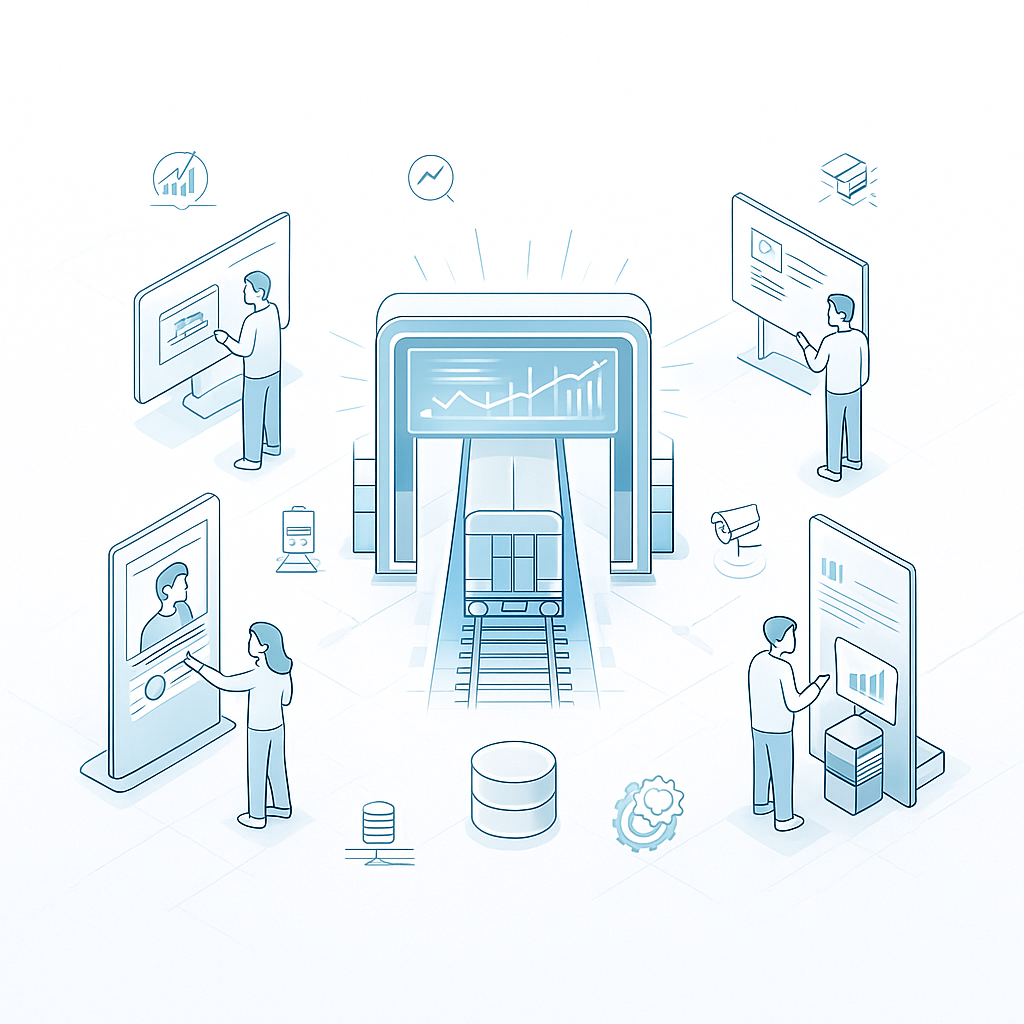
The company’s most recognizable product is the Railcar Inspection Portal, often referred to as the RIP. This is a structure that trains pass through while sensors capture thousands of images and data points. These images are sent to an analytics engine that identifies defects, damage, or anomalies. In the past, workers had to physically inspect railcars, often in harsh conditions, and the process could be slow and inconsistent. By automating the first layer of inspection and using analytics to flag issues, the RIP offers rail operators the ability to improve safety and speed at the same time. It also produces a digital record of every car that passes through, which can support compliance, maintenance planning, and operational oversight.
The significance of this approach becomes clear when viewed within the broader context of supply chain modernization. The rail industry is under pressure to increase efficiency and reduce downtime, and regulators expect higher levels of safety. Physical inspections are critical, but humans cannot feasibly check every angle of a moving train. AI powered image analysis provides a scalable solution that complements human expertise rather than replacing it. It gives inspectors better information and helps them focus on issues that matter most.
Beyond the RIP, Duos has built supporting tools that strengthen its overall platform. The company has developed an edge based AI engine that performs analysis on site rather than relying solely on cloud processing. This reduces latency and allows rail operators to receive actionable results almost immediately. The firm also offers a centralized analytics interface that aggregates data from multiple sites. Customers can track patterns, compare inspections, and identify trends that would be difficult to see without an integrated system.
Financially, Duos operates in a world that requires discipline and careful planning. As a small cap public company, it does not enjoy the unlimited resources of larger technology firms. It must win large, multi year contracts to fuel growth and must execute those contracts precisely in order to maintain credibility. Much of its revenue comes from a mix of hardware installations, software, and ongoing service agreements. The hardware projects can be substantial, often involving custom engineering and coordination with large rail operators. Once deployed, these systems generate recurring revenue through maintenance, software licensing, and analytics subscriptions. This combination of upfront project work and recurring software revenue is common in industrial technology firms, and it offers potential stability if the installed base continues to grow.
Duos serves a customer group that includes major railroads, transportation hubs, and government entities. These customers demand reliability above all else. A system that fails or performs inconsistently is not just an inconvenience. It can interrupt operations, slow cargo movement, and trigger regulatory challenges. For Duos, this means that its deployments must meet high standards, and its support infrastructure must be strong enough to handle mission critical environments. It is difficult work, but it also serves as a barrier to entry for smaller competitors.
The technology behind the company’s products is worth examining in more detail, because this is where Duos tries to separate itself from the pack. The core of its inspection systems is computer vision. High resolution cameras capture data at the speed of a moving train, and specialized lighting ensures that images remain consistent regardless of time of day or weather. The edge AI engine then processes the imagery and evaluates it for defects. This analysis can include identifying cracks, bent components, missing parts, and other signs of wear or damage. The system is fast and can operate around the clock without fatigue.
The shift from traditional inspection to AI enhanced analysis mirrors a larger movement across heavy industry. Operators in trucking, aviation, shipping, and energy are all exploring ways to bring intelligence to assets that have historically been monitored manually. The promise is simple. Better data leads to better maintenance decisions. That leads to fewer failures, less downtime, and lower costs. For regulators, AI enhanced inspection can increase transparency and improve safety outcomes. For companies, it represents a way to modernize without rebuilding entire fleets or facilities.
Of course, Duos does not operate in a vacuum. The competitive landscape for industrial AI is expanding. Large companies with deep research budgets are moving into computer vision and asset monitoring. Smaller startups are emerging with specialized AI models. There are also legacy inspection providers who are upgrading their own systems to incorporate digital intelligence. Duos must navigate this environment while maintaining its position as a specialist in rail inspection and edge based analytics.
One advantage it holds is experience. Duos has spent years refining its inspection systems and building relationships across the rail industry. Its deployments are complex and often customized for each site. This creates a moat based on expertise and integration capabilities. While a larger competitor might have more resources, it may not have the same depth of domain knowledge. Duos has focused on understanding how operators work, what their pain points are, and how inspection data fits into their daily processes. This is not something that can be replicated overnight.
Still, the company faces real challenges. As a small cap firm, it must balance research and development with the realities of cash flow. Large projects can strain resources, and revenue can fluctuate depending on the timing of contract milestones. Customer concentration is another concern. A small number of major operators dominate the rail industry, and losing one of these customers would have a significant impact. Competition for new projects is growing, and winning bids often requires proving both technical superiority and long term financial stability.
Yet these challenges also create opportunities. The rail industry is in the early stages of adopting AI enabled inspection at scale. North America alone has thousands of miles of track and countless assets that require monitoring. As operators look to cut costs and increase uptime, automated inspection becomes more appealing. International expansion may also be possible. Rail systems around the world face similar pressures, and the need for digital modernization is widespread.
Duos is also positioned to explore adjacent markets. Its expertise in computer vision and real time analytics could be applied to ports, highways, or other transportation networks. The same underlying technology could support perimeter security, smart infrastructure, or even industrial facilities that require continuous monitoring. The edge computing foundation is flexible enough for other use cases, and the company has indicated interest in building broader AI solutions that extend beyond rail.
Another area of potential growth lies in data products. As more inspection portals are deployed, the amount of historical data increases. With the right analytics layer, this information could be used to create predictive models that help operators anticipate failures before they occur. This would move Duos further into the world of predictive maintenance and digital twins, which are major themes in industrial technology today.
Leadership will play a significant role in the company’s future. Small firms rely on clear strategic direction and strong execution. Duos has worked to position itself as both a technology innovator and a practical solutions provider. Its messaging emphasizes a blend of engineering expertise and AI capability. The company must continue to show customers that it can deliver reliable systems while also evolving its platform to stay ahead of competitors.
Looking ahead three to five years, Duos has several possible trajectories. In one scenario, the company continues to grow its installed base of inspection portals, expands its subscription based analytics platform, and strengthens its position as a key player in rail modernization. In another scenario, larger technology firms or industrial companies enter the space aggressively, creating pressure on pricing and pushing smaller firms to differentiate even more sharply. A third scenario involves consolidation, where small cap companies with specialized capabilities become attractive acquisition targets for firms looking to accelerate their industrial AI strategy.
Whatever the outcome, Duos serves as an example of the important work happening outside the spotlight of big tech. The future of AI is not confined to chatbots, entertainment, or digital assistants. It includes the inspection of railcars, the monitoring of supply chains, and the automation of physical processes that keep the global economy functioning. These areas may not always make headlines, but they are foundational to modern society.
Duos Technologies shows what it looks like when AI moves into the physical world. It shows how computer vision can support human workers, how edge computing can deliver real time results, and how small companies can carve out valuable niches in the midst of sweeping technological change. While the company must navigate financial constraints and competitive pressures, it also occupies a position that is filled with potential. Investors and industry observers who want to understand the future of industrial automation would do well to watch how Duos evolves.
If the company can continue to execute, expand its technology, and build strong customer relationships, it may become one of the quiet success stories of the industrial AI era. If it faces setbacks, it will not be alone. The path for small cap technology firms is rarely smooth. What is clear is that Duos operates in a sector that is growing, relevant, and undergoing rapid transformation. That alone makes it a compelling company to study at this moment in time.
Want to invest in DUOT?
Visit our How to Invest page to get started with platforms like Fidelity or Robinhood.
Disclosure: This article is editorial and not sponsored by any companies mentioned. The views expressed in this article are those of the author and do not necessarily reflect the official policy or position of NeuralCapital.ai.