 NeuralCapital
Applied AI Grows Up: Inside GoGo AI Network and the Economics of Industrial Intelligence
Want to invest in GOGAF?
Visit our How to Invest page to get started with platforms like Fidelity or Robinhood.
Artificial intelligence adoption is no longer being driven by demos, novelty applications, or speculative consumer use cases. Instead, its most durable progress is happening quietly, inside factories, infrastructure systems, and large-scale industrial operations where efficiency gains are measured not in clicks or engagement, but in throughput, uptime, and cost per unit.
This shift has important implications for investors. The next phase of AI value creation is less visible, slower to scale, and operationally demanding. It favors companies that can integrate into complex environments, survive long enterprise sales cycles, and deliver repeatable economic outcomes. In short, applied AI is becoming infrastructure.
It is within this context that companies like GoGo AI Network Inc. (CSE: GOGO) (OTC: GOGAF) (FSE: 4E9) begin to make more sense. GoGo is not an operating AI company, nor is it a conventional venture-style incubator. Instead, it is an investment issuer focused on building a portfolio of applied artificial intelligence businesses designed to operate inside mission-critical systems. Its value proposition is not tied to a single product or model, but to a disciplined approach to capital allocation, portfolio support, and long-term monetization of industrial AI deployments.
Recent news from one of GoGo’s core portfolio companies, Algo8, provides a useful window into how this strategy translates from theory into execution.
The Applied AI Investment Landscape
The popular narrative around AI remains dominated by large language models, consumer tools, and platform-scale software companies. While these developments are important, they represent only one slice of AI’s economic impact. In parallel, a quieter transformation is underway across manufacturing, logistics, energy, and infrastructure.
In these environments, AI is not deployed to generate content or automate simple tasks. It is used to optimize production schedules, balance resource constraints, predict failures, and improve asset utilization across complex systems. The benefits are tangible but incremental: lower waste, higher yields, improved reliability, and better use of capital-intensive assets.
These deployments share several defining characteristics. They are slow to implement, require deep integration with existing systems, and demand a high level of reliability. Customers are typically large enterprises with long procurement cycles and strict performance requirements. Once deployed, however, these systems tend to become embedded, difficult to replace, and supported by long-term maintenance and service agreements.
From an investment perspective, applied industrial AI resembles infrastructure more than software-as-a-service. The growth curve is less dramatic, but the revenue streams can be durable and defensible. This is the terrain GoGo AI Network has chosen to operate in.
GoGo AI Network: An Investment Platform, Not a Product Company
GoGo AI Network positions itself as an investment issuer focused on identifying and supporting early- and growth-stage companies developing applied AI, automation, and next-generation software technologies. Rather than building products internally, GoGo allocates capital across a portfolio of companies that already operate at the intersection of AI and real-world systems.
The company’s stated strategy emphasizes several key criteria: enterprise-grade customers, defensible technology, scalable deployment models, and the potential for recurring revenue. GoGo’s role is to provide capital, strategic guidance, and support as these companies move from pilot deployments to broader commercial adoption.
This structure can be misunderstood in public markets. Without a single flagship product or easily comparable peer group, investment issuers like GoGo are often evaluated through the lens of optionality rather than execution. Progress occurs within portfolio companies, and value creation is not always immediately visible in consolidated financials.
As a result, milestones that demonstrate real-world adoption and contracted revenue are particularly important. They help clarify whether the portfolio companies are moving beyond experimentation and into sustained commercial relationships. This is where Algo8 enters the picture.
Algo8: Industrial AI in Practice
Algo8 is an enterprise industrial AI company focused on manufacturing, infrastructure, and large-scale operational systems. Its solutions are designed to integrate artificial intelligence into the core of production environments, enabling continuous optimization rather than isolated improvements.
At a high level, Algo8’s platform combines real-time data ingestion, advanced analytics, and AI-driven decision support to address common challenges in industrial operations. These include production scheduling, resource allocation, predictive maintenance, and root-cause analysis. Rather than replacing existing systems, the platform is built to sit on top of them, drawing from multiple data sources and providing actionable insights to operators and managers.
The economic objectives are straightforward. By improving Gross Value Added (GVA), Overall Equipment Effectiveness (OEE), and on-time delivery metrics, industrial AI systems aim to reduce waste, lower unit costs, and increase throughput. These improvements are often modest on a percentage basis, but meaningful in absolute terms for large facilities.
Importantly, Algo8’s approach emphasizes standardization and repeatability. Deployments are structured around a common architecture that can be replicated across multiple plants, reducing marginal costs and shortening implementation timelines over time. This design is critical for scaling within large enterprises.
The Recent Announcement: Facts on the Ground
In January 2026, GoGo AI Network announced that Algo8 had commenced Phase 1 implementation of a multi-plant digital transformation initiative with a global tire manufacturer. While the customer’s name was withheld, the company was described as a publicly listed, large-cap industrial manufacturer with a market capitalization exceeding approximately $2.8 billion.
The engagement includes an initial contract value of approximately $4.0 million, covering deployment at one manufacturing facility and blueprinting at an additional site. Upon full deployment, the agreement is expected to generate annual maintenance and support fees equal to 18% of the initial contract value, or roughly $0.72 million per year, payable quarterly over a five-year term.
In total, the contracted and recurring revenue potential associated with the initial scope of the project is approximately $7.6 million, subject to full deployment and standard terms and conditions. The solution is designed to scale across multiple plants using a standardized architecture, creating the possibility for expansion beyond the initial facilities.
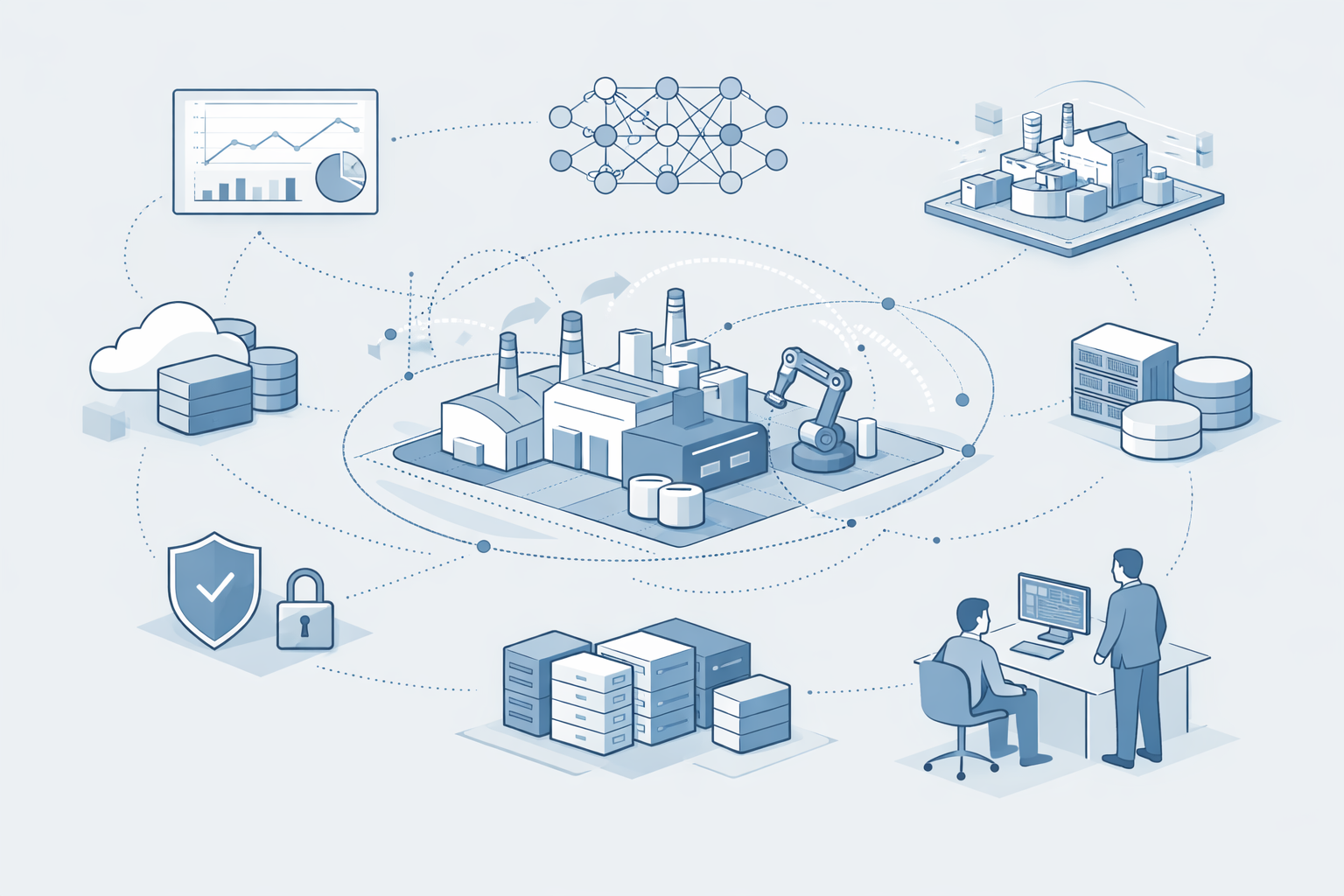
From a technical perspective, the deployment incorporates AI-driven production scheduling, digital twins, predictive maintenance, centralized data infrastructure, and advanced analytics. From a commercial perspective, it represents a multi-year relationship structured around both upfront implementation and ongoing support.
Why This Matters for GoGo AI Network
On its own, a $4 million contract is not transformative. Its significance lies in what it signals about the maturity of both Algo8 and GoGo’s broader investment thesis.
First, the announcement demonstrates enterprise validation. Large industrial manufacturers are conservative buyers of new technology, particularly when it touches core production systems. Moving from pilot programs to full-scale deployments requires confidence in both technical capability and execution. The willingness to commit capital at this level suggests that Algo8’s platform has crossed an important threshold.
Second, the structure of the contract highlights the importance of recurring revenue in industrial AI. Maintenance and support fees, particularly when tied to multi-year terms, create predictable cash flows and deepen customer relationships. For applied AI systems embedded in operations, ongoing support is not optional; it is integral to performance.
Third, the engagement reinforces the value of standardization. The ability to blueprint additional sites and replicate deployments across multiple plants is essential for scaling within large enterprises. This repeatability is what turns individual contracts into a sustainable business model.
For GoGo AI Network, this development provides tangible evidence that its portfolio strategy is producing results. It shows that at least one core investment has progressed from development into meaningful commercial deployment with a global customer, generating both upfront and recurring revenue. More broadly, it supports the idea that applied AI investments can move along a predictable commercialization path, even if that path is slower and less visible than consumer software adoption.
Risks and Constraints
Despite these positive signals, it is important to acknowledge the constraints inherent in this model. Enterprise industrial AI deployments involve long sales cycles, complex integrations, and significant execution risk. Scaling across multiple facilities requires coordination, change management, and sustained customer engagement.
From an investment issuer perspective, timing matters. Value creation within portfolio companies may take years to translate into realized returns at the holding company level. Portfolio concentration and capital allocation decisions can also influence outcomes.
These risks are not unique to GoGo AI Network, but they do underscore the importance of patience and disciplined execution in applied AI investing.
A Long-Term View on Applied AI
The evolution of artificial intelligence is entering a phase where its most meaningful applications are embedded, operational, and often unglamorous. In factories and infrastructure systems, AI is becoming part of the machinery of production, valued for its reliability rather than its novelty.
GoGo AI Network’s strategy reflects this reality. By focusing on applied AI companies with enterprise customers and scalable deployment models, it is positioning itself for a long-duration adoption curve. The recent Algo8 contract does not change the trajectory overnight, but it provides a clear data point: applied AI is moving from promise to practice.
For investors willing to look beyond headlines and hype cycles, these developments offer a glimpse into how AI may ultimately create value—not through rapid disruption, but through steady integration into the systems that underpin the global economy.
Want to invest in GOGAF?
Visit our How to Invest page to get started with platforms like Fidelity or Robinhood.
Disclosure: This article is editorial and not sponsored by any companies mentioned. The views expressed in this article are those of the author and do not necessarily reflect the official policy or position of NeuralCapital.ai.